
During the 19th century, the Nupe/Hausa warriors set up the method of the Edo system of Government in Auchi, and set up their administration which would enable them to govern Auchi from Bida. They were then teachers and leaders and they needed one recognized leader for the five villages in Auchi. At that time, Ikhelebe Osimhe, son of Madam Aneke Ortsudo, who was born into an Ortse type of marriage at Akpepeke from Usogun, the premier villag inn Auchi, was acting as an agent to the invaders on the slave trade . In one encounter between the Auchi and the invaders, Madam Aneke Ortsudo, a grand daughter of Usogun was killed. As a mark of compensation and appeasement, Onara Osimhe who was an elder brother of the same parents with Ikelebe Osimhe was passed over and the choice fell on Ikelebe Osimhe as the first ruler OGIE-AUCHI) of Auchi in 1819 with the title of TARU’ Otaru from the invaders.
Below is a list of the first Otarus of Auchi and the years they reigned:
1.Ikelebe 1819-1860
2.Imoudu 1861-1875
3.Idao 1875-1905
4.Odifiri 1905
5.Ikharo 1905-1919
6 D.H. Momoh 1919-1944
- Prince M.J.Momoh 1945-1955
- Cheif A.K.Momoh 1955-1970
Religion-Islam.
The Islamic religion found its way into Auchi as early as 1910 and the first Jum’ah Mosque was built in 1914 before Western education found its way in 1922.
This is circumstantial to the reason why the people are predominantly Muslims. Mosques are found in every corner of the town for Islamic worships. The five daily prayers are said in the various mosques.

Marriage
The traditions and customs that were originally put in place for marriages are not practiced so often nowadays due to the influence of Religious practices and Western culture, but the tradition involved in getting married in Auchi is still outlined below.
In Auchi, a man who is interested in marrying a woman expresses his intention by making a public present usually in cash known as ‘Ize-Otse’ gift to the woman during an annual customary dance. If the gift is not rejected by the family of the girl, it marks a formal approval of the man’s application with the gift.
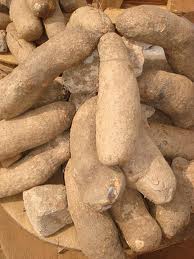
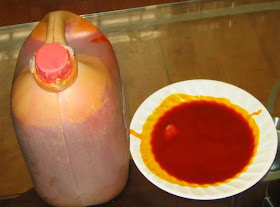
Courtship then starts and the man starts to pay regular visits to the girl and her relations. The next step is the extension of courtship to the parents of the partners. The family of the man sends gifts of Salt, Yams and Palm oil to the family of the girl.
The family of the girl then calls a meeting of the women in their family to discuss the merit or otherwise of the man’s request.
In the meeting family of the intending husband is thoroughly screened and when finally approved, the edibles are shared among the women of the wife-to-be’s family.
The length of time for courtship varies depending on the age of the girl at the time of ‘Ize-otse’ gift and the seriousness on the part of the intending husband. It is normally 6 months.
Dowry is also paid and the amount payed as dowry as increased over the years and has never decreased;
i. From 1929 to 1954 the customary dowry was 24Naira minus conjugal expenses and labour.
ii. From 1955 to 1968 it was 70Naira minus conjugal expenses and labour.
iii From 1968 till now, with the present economic state of the Naira, dowry payable depends on the agreement reached between the two families.
Before thee marriage is consummated and the bride joins the bride-groom, a request gift comprising of 100 kola nuts, one keg of palm wine and 10Naira (lol) in cash is sent to the family of the bride to be. When the gift is accepted, a date for the marriage is fixed and 7days to the date of the marriage, girl and boys from the two families meet and entertain the partners who both stay indoors until the marriage is celebrated and the girl taken to the boy’s house. Assorted gifts are demanded and paid for by the boy’s family to the members of the girls family.


